
"arabica elevation"
3000 article(s) found

Costa Rican coffee bean flavor description taste treatment grinding scale varieties
All coffee grows in the tropics, in fact, altitude has no direct effect on coffee, but altitude can affect the growth, development and quality of coffee through the redistribution of meteorological elements (temperature, light, heat, wind speed, rainfall, etc.). The tropical region between the Tropic of Cancer and the Tropic of Cancer produces the world's truly high-quality Arabica coffee. Central and South America, South Asia and

Coffee varieties Arabica Coffee varieties Abstract what are the main varieties of fine coffee
Coffee can be divided into three main varieties, namely, Arabica (Coffea arabica), Robusta Coffea canephora (Robusta) and Liberia (Coffea liberica). Arabica is the main force of boutique coffee, suitable for growing at higher elevations, tastes better, is more delicate, needs care, and is the smallest of the three, so it is also known as

What is Arabica mother coffee? Introduction to Arabica Coffee varieties
Professional coffee knowledge exchange more coffee bean information Please pay attention to the coffee workshop (Wechat official account cafe_style) Coffee can be divided into three main varieties, namely, Arabica (Coffea arabica), Robusta Coffea canephora (Robusta) and Coffea liberica. Arabica is the main force of boutique coffee, suitable for growing at higher altitude

Balanced and refreshing Hasenda Coffee Estate Fine Coffee Bean Planting Location Climate Elevation Simple
These islands are volcanic formations formed by lava eruptions. Even now, volcanic eruptions continue to shape the geography of the archipelago. The Galapagos Islands are the product of one of the greatest volcanic activity in the world. The climate here is largely influenced by ocean currents, including the Humboldt cold and El Nino warm currents. Galapagos is rich in species, flora and fauna of the warm and cold world

What is the difference between coffee beans from different climates and altitudes?
The main producing areas are Java, Sulawesi and Sumatra, 90% of which are Robusta species. Indonesia's archipelago is the world's largest Robusta bean producing area. Java and Sumatra are the most famous. Another article about how growers choose coffee varieties

Introduction to three kinds of coffee beans in boutique coffee science
At present, the main species of coffee plants growing in different regions of the world include the following: ARABICA/ROBUSTA/LIBERICA/DEWEVREI/STENOPHILLA/CONGENSIS/ABEOKUTAS/KLAINII/ZAANGUEBARIAE/RACEMOSA. Among them, the most commonly used coffee is divided into three categories: small seed coffee beans (Arabica) and medium seed coffee beans (Robusta).

Juice Taste Panama Hartman Estate Fine Coffee Bean Planting Location Climate Elevation
Flavor Description: Berry, Litchi Aroma, Medium Malic Acid, Medium Juice Texture, Berry Tone, Grape, Apricot, Chocolate Manor: Panama Hartman Manor Honey Processing Country of Origin: Panama Origin: Volcan Variety: Arabica Altitude: 1260-1500Meters Processing: Honey Processing Flavor Description: Dark Chocolate, Dark Fruit Aroma, Bright
Indonesian civet coffee (Kopi Luwak) Kopi Luwak
Most coffee lovers are familiar with the name civet, because of its craftsmanship and price, which seem to cast a mysterious veil over civet coffee. Let the world, let many friends who love coffee are difficult to see in person. Muskcat poop civet, Indonesian Luwak, is grown on the Indonesian island of Sumatra.
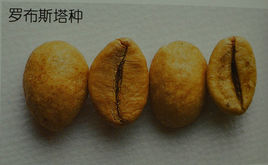
About the characteristics and uses of robusta beans-not all robusta beans are shoddy beans
[introduction] "Robusta" coffee is commonly known as "sturdy beans". It can be planted at low elevations (200 to 800 meters above sea level). It has strong resistance to diseases and insect pests and is not vulnerable to agricultural diseases. the annual output of coffee trees per unit area is higher, and it is harvested in large quantities by machine. generally speaking, the production cost is much lower than that of Ala "Robusta" coffee, commonly known as "sturdy beans", low altitude areas (elevation 200 to 800)
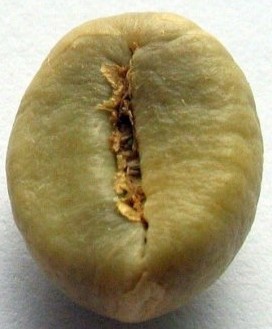
How to correctly identify robusta coffee beans and correctly understand their characteristics, uses and benefits
[introduction] "Robusta" coffee is commonly known as "sturdy beans". It can be planted at low elevations (200 to 800 meters above sea level). It has strong resistance to diseases and insect pests and is not vulnerable to agricultural diseases. the annual output of coffee trees per unit area is higher, and it is harvested in large quantities by machine. generally speaking, the production cost is much lower than that of Ala "Robusta" coffee, commonly known as "sturdy beans", low altitude areas (elevation 200 to 800)

Species of coffee plants growing in different regions of the world
At present, the main species of coffee plants growing in different regions of the world include the following: ARABICA/ROBUSTA/LIBERICA/DEWEVREI/STENOPHILLA/CONGENSIS/ABEOKUTAS/KLAINII/ZAANGUEBARIAE/RACEMOSA. Among them, the most commonly used coffee is divided into three categories: small seed coffee beans (Arabica) and medium seed coffee beans (Robusta).
What is Robusta Coffee?
Robusta is one of the most important coffee tree species in the world. Robusta (Coffee Robusta Linden). A leaf rust tolerant variety found in Congo, Africa, is more resistant than Arabica varieties. In the general coffee market, many people like to compare Robusta and Arabica coffee beans, which is incorrect. In fact, the Robusta provenance

Coffee and Red Wine treatment Arabica Coffee Bean producing area and Price
Coffee red wine treatment Arabica coffee bean producing area and price acetic acid fermentation method: cleaner, more active acid, brighter acid quality, citric acid lactic acid fermentation method: taste more round, less cleanliness than acetic acid fermentation method, higher alcohol thickness, malic acid / tartaric acid before this, the processing plant uses manual operation handed down from generation to generation, for example, bite and feel the coffee

Litchi aroma of Panama Hartman Estate Fine coffee beans cultivation Location Climate Elevation
Estate: Panama Hartman Estate Wine Treatment Country of Origin: Panama Region: Volcan Variety: Arabica Altitude: 1260-1500Meters Treatment: Wine Treatment winey Flavor Description: Berry, Litchi Aroma, Medium Malic Acid, Medium Juice Texture, Berry Tone, Grape, Apricot, Chocolate Estate: Panama Hartman Estate Honey Treatment

What's the difference between iron pickup and Arabica? introduction to grinding scale by flavor description method
The introduction of boutique coffee beans has different flavor characteristics. "Arabica" coffee has a varied and broad potential flavor. Arabica coffee produced in different regions, different elevations and different climates usually has its own characteristics and can show a completely different flavor. "Arabica" coffee smells like grass when it is not roasted.

Moderate full-bodied Hazenda Coffee Estate Fine Coffee Bean Planting Location Climate Elevation Simple
There is a dock to the south, more than 900 meters long. In the harbor, ships from different parts of the world are moored, flying various flags. The port railway leads to Quito, the capital, and a series of highways connect Quito with other cities in the country. Bananas, cocoa, coffee, cotton and other products from all over the country are collected and distributed here. In the history of friendly exchanges between the peoples of China and Ecuador,

Is Robusta a boutique coffee? why is Robusta bad for the origin of Robusta coffee beans?
Professional coffee knowledge exchange more coffee bean information please follow the coffee workshop (Wechat official account cafe_style) Robsta most of the coffee growing in Ghana is Robusta, which grows at low elevations and warmer temperatures than Arabica. Ghana's highest point is only about 400 meters above sea level, and its warm tropical climate makes it an ideal place to grow Robusta. But in special
Some coffee beans origin, characteristics and introduction
West (South America): One of the world's largest coffee producers and exporters, it can be called the "coffee continent." Almost all Arabica varieties are of good quality and stable prices, and have been a necessity for blended coffee since ancient times. Name Roasting degree Taste characteristics Brazilian coffee Moderately roasted mild, sour and bitter moderate, soft aroma especially

Coffee knowledge the growth trainee of coffee trees
Coffee trees belong to the evergreen family of Akanaceae. They are tropical plants that are not cold. Most of them are planted in areas with elevations of 300,400m, and also in highlands with elevations of 2000-2500 meters. But those who plant on slopes above 1500 meters above sea level have better quality. Coffee trees are most suitable for growth when the average temperature is about 20 degrees Celsius, the annual precipitation is 1500-2000 mm, and the soil is permeable.

What are the advantages of high-altitude coffee beans? what are the differences in the flavor of different varieties of coffee beans at different elevations?
Introduction of high-altitude coffee varieties generally speaking, with the increase of altitude, the aroma of coffee will become more prominent and unique (see figure). From the temperature and sweetness of Brazilian beans at 3500 feet to the soaring taste of Ethiopian coffee beans above 6000 feet, altitude will give coffee beans a more complex and subtle taste. Coffee beans grown at high elevations are hard.